
Budget Decorating Tips for Small Condos or Apartments
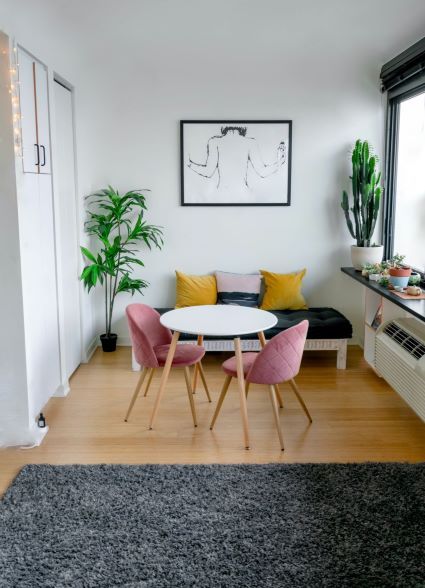
Decorating a small space can be quite a challenging task; it becomes even more so when you add the constraints of a limited budget. However, it’s not impossible! There are many ways you can give your condo or apartment unit a glow-up without a budget blow-up. Here are some tips to get you started on an affordable but no less stylish home makeover:
Prioritize Your Purchases
If you’re on a tight budget, you likely won’t be able to do up every room in one go. As such, you need to learn how to prioritize. Pick the room that will see the most use, which for many will be the living room or the bedroom. That said, the final decision will still be up to you. If you spend a lot of time in the kitchen, then you’ll be happier if you furnish and decorate that space first.
When it comes to prioritization, the key is to get the biggest or central parts of a room or design. For the living room, it would be the couch or sofa; if you already have one, then pick out a coffee table or a TV cabinet. For the bedroom, the mattress and bedframe will take precedence; for the dining room, the table should definitely come first; and so on.
If you’re having a bit of trouble with funding, you may want to open your loan app to borrow cash and supplement your budget. With flexible payment terms and low interest, a cash loan like this can stretch your decorating budget further without messing up your finances.
Have a Vision So You Don’t Overspend
If you have limited funds for decorating or remodeling, the best thing to do is to have a vision and a plan. This way, you won’t end up buying the wrong items or overspending.
You can start by picking paint and fabric colors to anchor the design. If you want, you can also pick a central theme, like art deco, contemporary, minimalist, or retro. In case you aren’t artistically inclined
and feel like preparing a vision board is beyond your skills, the Internet will always be there to help. Just visit sites like Instagram or Pinterest to get a whole lot of decorating and design inspirations.
Another way you can plan and find inspiration for sprucing up a small space is to go to the mall or furniture shop. Usually, these places will have showroom-like displays for each room of the house to better advertise their products. If it’s allowed by the establishment, take pictures of the set-ups from different angles. Having multiple perspectives to look at will make it easier for you to visualize how a layout will look like in your own home.
Afterwards, itemize what you need to spend on. Aside from furniture and accessories, you should also account for expenses like payment for laborers if you’re hiring workers or buying/renting tools if you’re going to DIY. You should also set aside a small fund for incidentals, like additional screws, an extra gallon of paint, and other related costs.
Look for Stores Instead of Items
Most of the time, your shopping strategy is probably looking for an item that suits your budget and then buying that. However, there may be times that this technique will actually limit your choices. If you find that this is the case, it’s better to look for stores that offer lower prices and see if you can find bargains there.
Some of the places to look are second-hand stores and surplus shops. You should also check out online marketplaces that allow the selling of pre-loved items. Do note that the items you buy from these places may need a bit more work, like painting or washing. That said, the money you’ll save will probably be worth it in the end. You may even find unexpected gems, like vintage pieces, that will add more charm to your space. DIY-ing can also give you a sense of fulfillment.
Decorate and Furnish Vertically
Most people tend to look at the available floor area when decorating, but this isn’t always applicable in smaller living spaces. What you can do is to take a look at the walls and ceilings. Indeed, when you have limited square footage in your condo or apartment, the best approach is to maximize vertical space. A good example here is the kitchen. Instead of storing pots and pans in a cabinet, install a rack system with hooks for hanging. This is a lot cheaper than getting new cabinets or shelves.
The same principle goes for furnishings and other decorative elements. For example, look for floor lamps or desk lamps with a tall, sleek silhouette. If you want to dress up your windows with curtains, hang them closer to the ceiling. These design “techniques” can create the illusion of a bigger, taller space.
Maximize Mirrors and Natural Light
Speaking of creating illusions, one of the most effective ways to open up a small space and make them seem larger is to use mirrors. Thanks to their capability of reflecting light, mirrors can brighten up a space with ease and make it feel more welcoming. You can further maximize this effect by choosing accessories with reflective elements like glass and chrome. For the best results, apply the previous principle of decorating vertically. Try stacking small mirrors on top of each other or placing a slender mirror behind a side table.
Another tip is to get furniture that lets the light pass through. Get open-back or mirror-back shelves, as well as legged sofas with some space underneath instead of ones that sit too close to the floor. You might not immediately appreciate the effect, but you’ll be surprised by how much of a difference this design choice makes
Finally, if your space has plenty of windows, it’s a good idea to make the most of natural light. Use sheer curtains instead of thick drapes; you can also opt to mount blinds or valances instead to let as much sunshine into your space. There’s a different quality to natural light compared to fluorescents that somehow makes a room look fresher and feel more energized.
Choose a Light, Uniform Color Scheme
When it comes to colors, the best choice for small condos and apartments will always be lighter shades because they reflect light better. You don’t even have to stick to the usual white, cream, or beige, which all go well with everything but can be a little plain. Some colors you can try are eggshell blue, mint, and powder pink. Even a light gray will work in certain circumstances.
Of course, this doesn’t mean that darker, warmer colors don’t have room in small spaces. You just have to be strategic and sporadic in their use (see the next section). If you’re a little hesitant about bolder colors like red or royal purple, try testing warmer tones of green first like olive or moss. You can also explore peachy oranges or soft yellows if you want brighter tones.
Use Paint or Colors to Section Off Areas
If you live in a studio or one-bedroom space, you can create the illusion of having different “rooms” by using colors. For example, you can use an accent wall painted with a soft old rose behind the sofa to designate the space as a living room. You can also create a transition with area rugs, though it’s best to go for simple, geometric patterns over busy, intricate ones.
Dress Up What You Have
Finally, if your goal is to save money, the best design decision is to utilize what you already have. This is particularly true for bigger pieces of furniture. The problem, of course, is that your old pieces may already be suffering from wear and tear.
Fortunately, there are many ways to change up the look of old home furnishings. For example, your sofa might just need a bit of cleaning to look new again. For a completely new look, you may opt to buy removable, washable covers instead of reupholstering. What’s great about covers is that aside from letting you switch up the style of your living room more often, they’re also considerably more affordable. There are also plenty of covers that you can buy to give your throw pillows a new look.
For furniture like cabinets, the simplest way to give them a new look is to paint the doors. If you have hardwood cabinet doors and you want to preserve their look, staining them and then finishing with varnish is the way to go. You can also get new hardware, like handles and hinges; you can do the same for your bathroom and kitchen’s water fixtures. If you want to experiment a little bit, try going for matte finishes instead of the usual shiny chrome.
As you can see, there are many ways to give your humble condo or apartment a new look without spending too much. The most important thing to remember is that you should have a plan, including a detailed budget, and you should learn how to prioritize. All the rest will depend on these two factors.
Good luck on your home decorating project!